What counts as a cottage food business
A cottage food business is a food business you run from your own home kitchen, selling foods your state considers low-risk, usually straight to the person who will eat them. That is the whole definition. If you bake cookies in your kitchen and sell them to a neighbor, you are running a cottage food business whether you have thought of it that way or not.
The logic behind the laws is simple: shelf-stable foods that do not need refrigeration rarely make anyone sick, so states let you make and sell them without a licensed commercial kitchen. That is why breads, cookies, and most cakes usually qualify, while cheesecake and cream-filled anything usually do not.
What a cottage food business is not: a restaurant, a caterer, or a wholesale supplier. Selling through grocery stores or restaurants generally pushes you out of cottage territory and into full food licensing, which is a much bigger project for another day.
The rules that exist almost everywhere
Each state writes its own cottage food law, so the specifics differ, sometimes a lot. But nearly every program is built from the same handful of pieces:
- An approved food list. Most states publish exactly which foods qualify. Non-perishable bakes are the usual pattern: breads, cookies, jams and jellies, and in many states cakes and frostings as long as nothing in them needs refrigeration, which is why cream cheese frosting is often excluded.
- Labels on everything. Nearly every state requires your name and address, the product name, the ingredients in order, the major allergens, and a disclosure that the food was made in a home kitchen that is not subject to inspection.
- Limits on where you sell. Direct to consumer is the default: porch pickup, local delivery, farmers markets. Some states also allow online sales or shipping, and many do not, so check before you promise to mail anything.
- Revenue caps in some states. Some programs cap how much you can earn per year before you need a full license. Many states set no cap at all.
- Permits and training in some states. Depending on where you live, you may need to register, pass a kitchen inspection, or take a food-handler course. Plenty of states require none of those.
- When this list does not settle a question, one page does: search your state name plus cottage food law and open the result from your state department of agriculture or health. That page is the source of truth, and it usually answers everything here in a single read.
Getting set up without overthinking it
This is where bakers stall, sometimes for months, because the legal pages read like homework. The actual sequence is short, and most of it you only do once:
- Confirm your foods qualify. Read your state’s approved list before you design labels or buy boxes. If your signature bake does not qualify, you want to know today, not after your first market.
- Do the training or permit if your state requires one. Food-handler courses are usually online and inexpensive, and most people finish in an evening.
- Make your labels. One template covers every product: your name and address, the product name, ingredients, allergens, and the home-kitchen disclosure. Print a stack and label as you bake.
- Set prices that include your time. A $35 custom cake that takes three hours and $12 of ingredients pays you less than $8 an hour. Price the hours, not just the flour.
- Open an order channel. Decide exactly where orders will land before you announce anything. Otherwise they land everywhere, and you start the business already behind.
Taking orders like a business, not a group chat
The legal setup is a one-time job. The thing that decides whether this stays enjoyable is operational: where your orders live. When requests arrive through Instagram comments, two different chat apps, and your aunt relaying a coworker’s order, details get lost, and lost details cost real money. A wrong pickup date eats a Saturday. A missed allergy answer is far worse than that.
Three habits cover most of it. Keep each order’s details in one place, with the items, the date, and the customer’s answers together. Take a deposit on custom work, because a date someone has paid to hold is a date they will show up for. And publish your prices, because a public price list ends the quiet haggling that happens when every quote is a private negotiation.
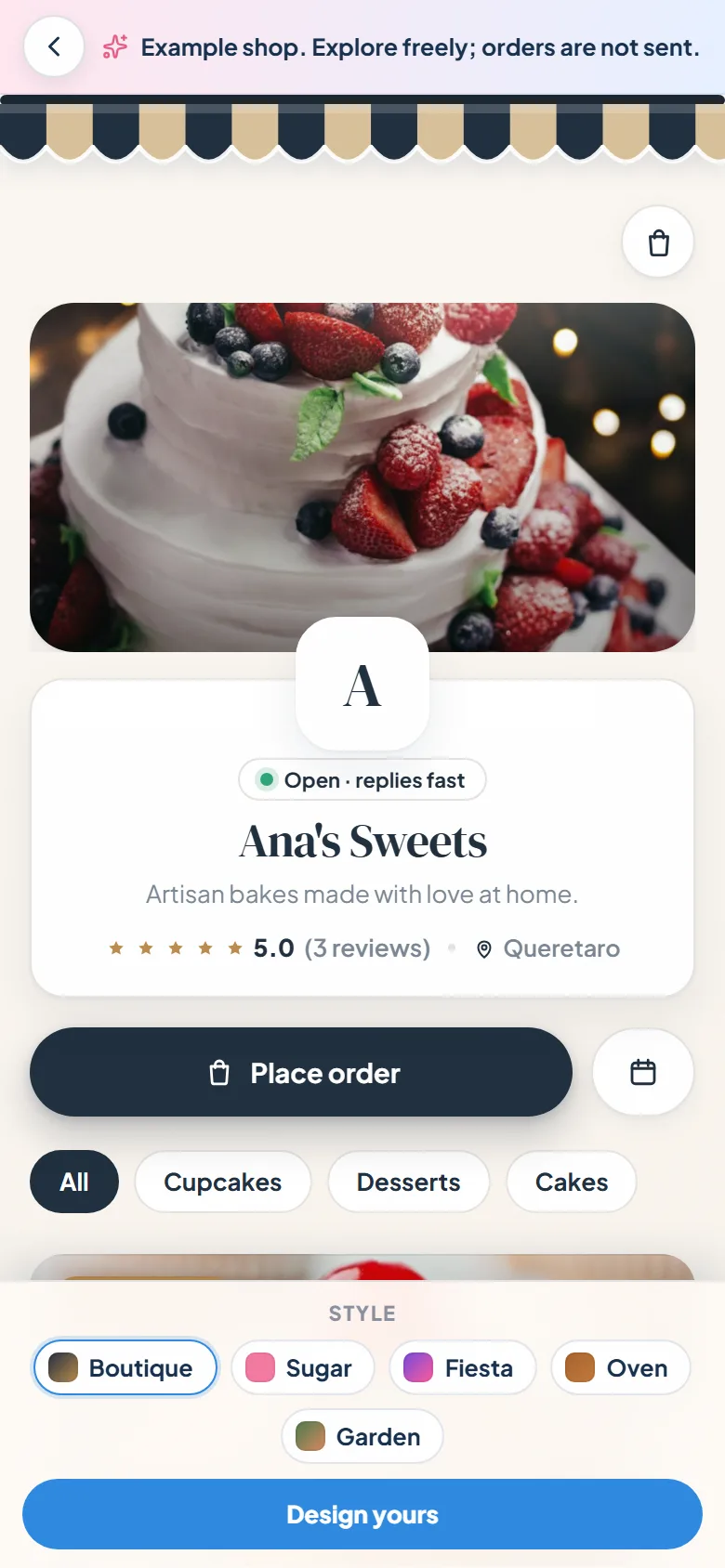
You can run all three habits with a notebook and a payment app, and plenty of bakers do. A tool like Confita just makes them automatic: one shop link with your products and prices, order questions customers answer up front, and quote links that carry the deposit and payment instructions for you. At $4.99/month flat, it does not need to change your math.
A shop link keeps the business side tidy
This is what a customer sees when they open a Confita shop on their phone: products with real prices, your schedule, and the questions you need answered before you can say yes. Nothing to install, nothing to explain.
Labels, deposits, and a clean record of every sale are all easier to keep up when the orders arrive complete in the first place.
Make the order side as official as the label side
Set up a shop link in an afternoon. Free for 30 days, no card today, and you keep it only if it earns its $4.99.
Frequently asked questions
What is a cottage food business?
A food business run from a residential kitchen under your state’s cottage food law, selling low-risk foods, usually directly to the customer. Breads, cookies, cakes, and jams are the classic examples. Each state sets its own food list, sales rules, and paperwork.
Do I need a license to sell baked goods from home?
It depends on your state. Many states require a registration, a permit, or a food-handler course before you sell, and a few want a home kitchen inspection. Others require nothing beyond following the food and labeling rules. Check your state’s cottage food program before your first sale.
What foods can I sell under cottage food laws?
The general pattern is non-perishable: breads, cookies, jams and jellies, and in many states cakes and frostings without cream cheese or other ingredients that need refrigeration. Anything that must stay cold usually does not qualify. Your state publishes its own approved list, and that list wins.
How much money can a cottage food business make?
Some states cap annual cottage food revenue and many set no cap at all, so check your program. In practice, the cap most bakers hit first is capacity: one oven and a couple of free evenings a week. That is an argument for pricing well, not for baking more.